
Boundaries: The Quiet Foundation of Self-Trust
Boundaries: The Quiet Foundation of Self-Trust
If there is one common thread beneath self-care, self-respect, emotional steadiness, and creative expression, it is this:
Boundaries.
Not rigid walls.
Not defenses.
But clear edges.
For many women — especially those who are sensitive, intuitive, or accustomed to caring for others — boundaries can feel complicated. We are taught to accommodate. To understand. To stretch. To hold.
Over time, that stretching becomes exhaustion.
Healthy boundaries are not built through force. They are built through alignment.
Here are a few steady ways we begin:
We stay in integrity.
We notice when something feels misaligned in our body. We stop overriding that signal. Integrity is not about perfection — it is about listening.
We question the “should.”
When the word “should” creates contraction, guilt, or resentment, we pause. Often, that tension is information.
We tell ourselves the truth.
Not the dramatic story. Not the convenient one. The honest one. Boundaries require clarity.
We stay connected to something steady.
Nature. The land. Service. A practice that reminds us we are part of something larger than the urgency of the moment.
We stop tolerating harm — including self-harm in thought.
Harsh inner dialogue erodes boundaries from the inside out. A regulated nervous system requires safety, even in our own language.
We allow ourselves to love and be loved.
Real boundaries do not prevent love. They make it cleaner.
We let feeling inform action.
Instead of living only from thought, we allow the body to have a voice. Often, the body knows when something is too much long before the mind admits it.
We make space for joy.
Play. Rest. Creativity. Not as reward — but as necessity.
Boundaries are not about pushing others away.
They are about staying in relationship without abandoning yourself.
When your nervous system feels safe, your edges become clearer. You stop absorbing what is not yours. You respond instead of react.
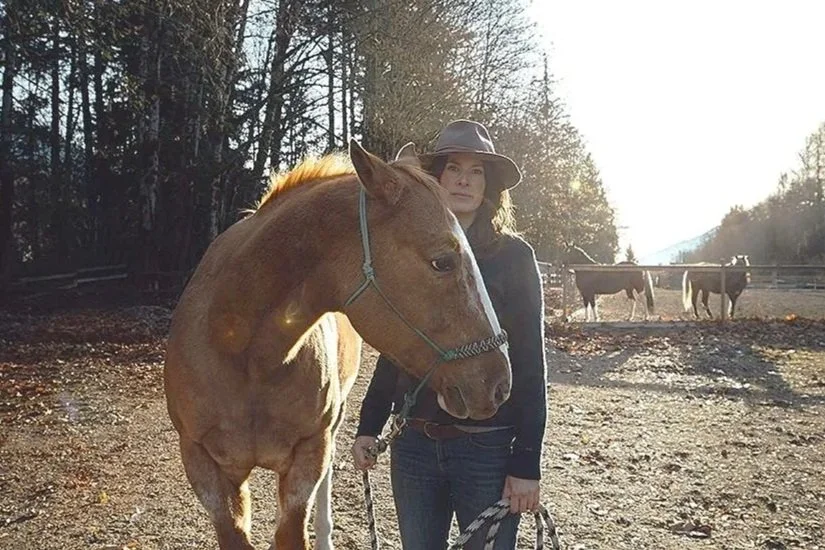
In the presence of the herd, boundaries become visible. Horses respond immediately to congruence and inconsistency. If you are unsure of your edges, they reflect it. If you soften too much, they step closer. If you brace, they step away.
There is no judgment in it. Only feedback.
Over time, that feedback strengthens self-trust.
Boundaries are not loud. They are steady.
And steadiness changes everything.