The Role of Horses in Stress Recovery
Co-Regulation, Heart Rate Variability, and the Role of Horses in Stress Recovery
Nervous system regulation is not something we do alone.
Humans are wired for co-regulation. From infancy onward, our nervous systems stabilize in relationship with others.
This is why safe, steady presence matters so deeply in healing work.
Co-regulation occurs when one regulated nervous system supports another in moving out of stress activation.
Horses are uniquely suited to this process.
As large, social prey animals, horses live in highly attuned herds. Their physiology is built for rapid detection of subtle changes in environment and energy. Because of this sensitivity, they often respond quickly to shifts in human nervous system states.
Studies in equine-assisted interventions have observed:
• Decreases in cortisol (stress hormone)
• Improvements in heart rate variability (HRV)
• Increased parasympathetic activation
• Reduced anxiety markers
Heart rate variability is a key measure of nervous system flexibility. Higher HRV is associated with resilience, emotional regulation, and adaptability.
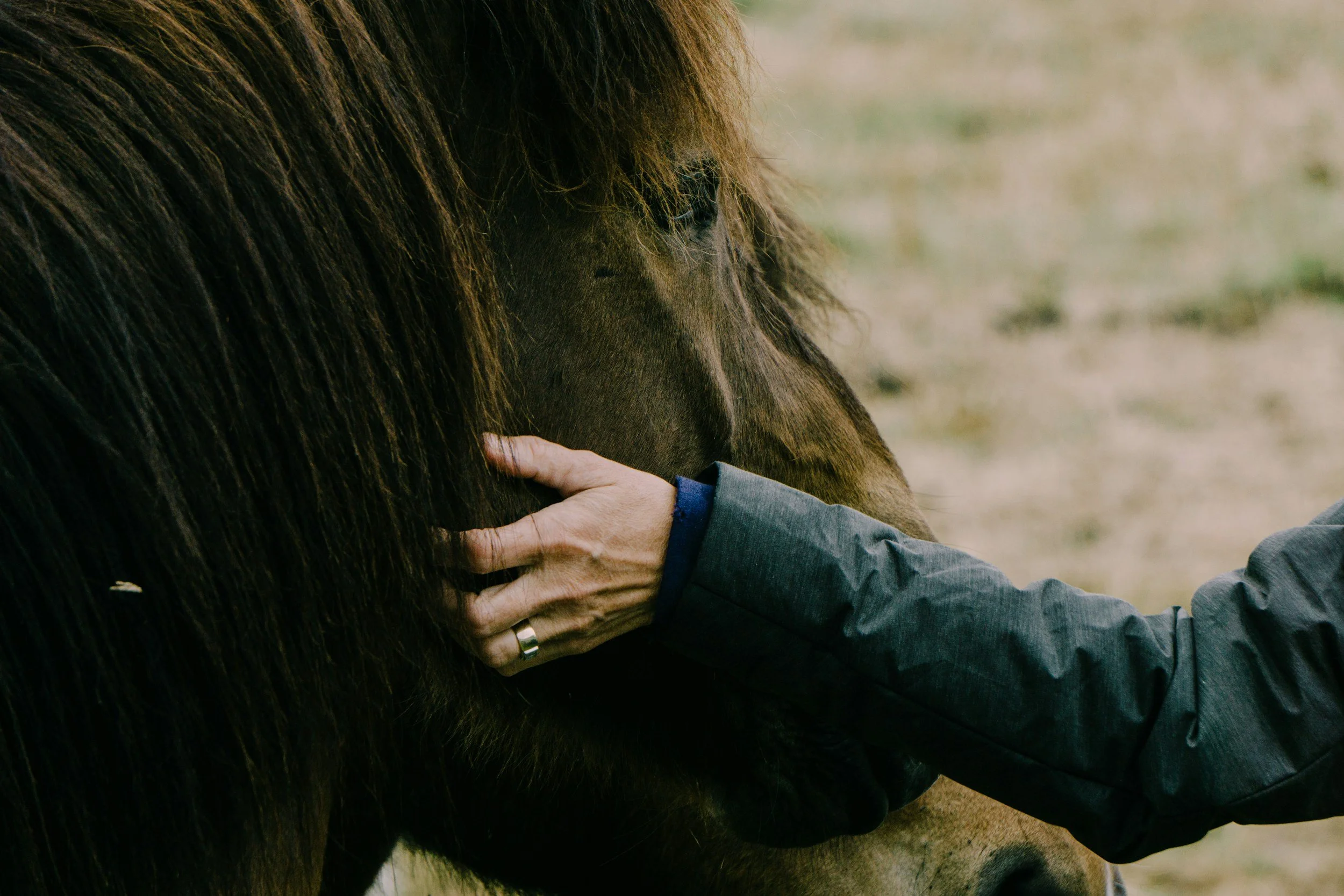
Time spent in the presence of calm horses — particularly in natural settings — can support shifts toward parasympathetic dominance. This is the branch responsible for rest, digestion, and restoration.
In healing with horses sessions in Squamish Valley, this process unfolds gently.
There is no riding. No performance. The work is relational and ground-based. As breath slows and muscle tension releases, the body begins to reorganize itself toward safety.
Co-regulation with horses does not override trauma. It does not bypass emotion.
It offers something simpler and more foundational:
A regulated experience in real time.
For women experiencing burnout and nervous system fatigue, that experience can be profoundly restorative.